When I arrived at the harbour in Sines, on Portugal’s Alentejo coast, for what would become one of the most unusual underwater wine tourism experiences I’ve ever had, one of the diving instructors asked me a question I had definitely never expected to hear at a wine event:
“Have you ever dived for a bottle of wine before?”
My answer probably surprised him just as much as the question surprised me.
“Well… technically, yes,” I said.
The previous summer, while sailing around Formentera, we were carrying our supermarket shopping back to the boat when a very good bottle of wine slipped overboard and sank straight to the seabed, about four metres below us.
I could see it from the boat’s deck, the Mediterranean’s clear water not being an impediment. And there was absolutely no way I was leaving it there.
So I grabbed my snorkelling gear, jumped in, dived down and recovered it.
Bottle rescued. Crisis avoided. Priorities firmly established.
That, I suppose, was my first experience of diving for wine.
But underwater wine tourism in Sines was going to be something entirely different.
This time, the bottle had not ended up in the sea by accident. It was supposed to be there — deliberately aged beneath the Atlantic — and I was about to put on full scuba equipment, descend to an underwater wine cellar and retrieve one myself.
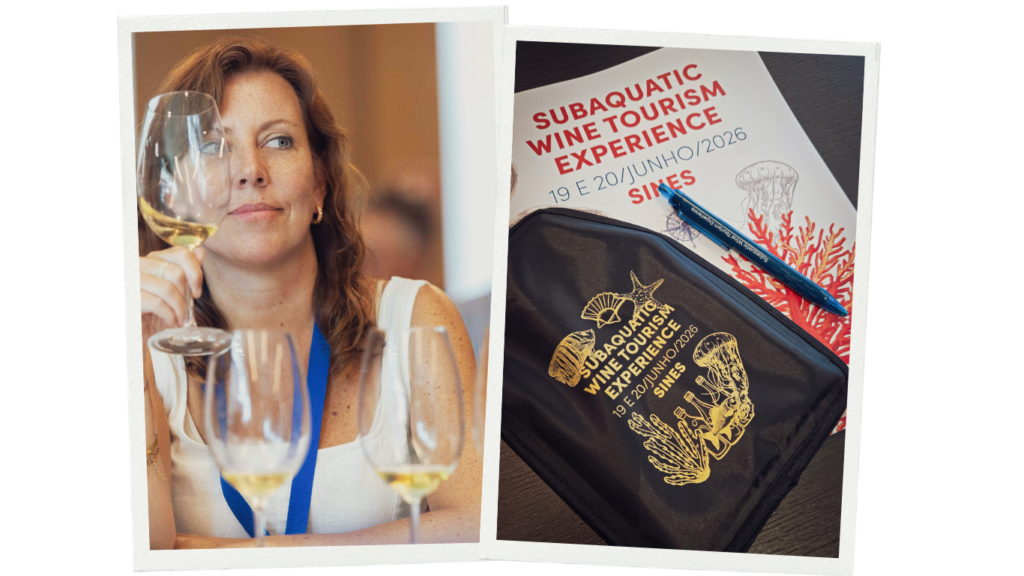
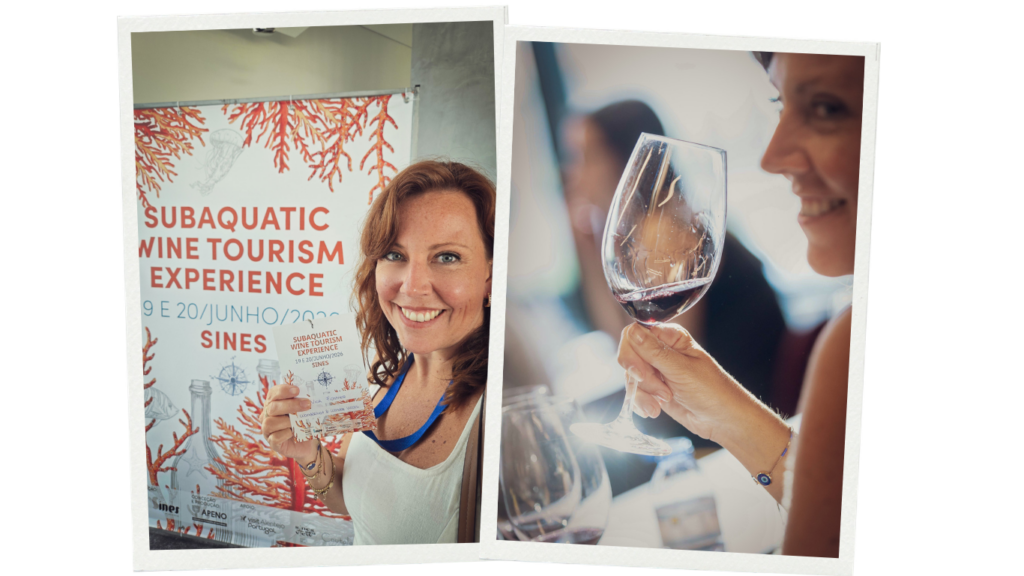
I had been invited by APENO – the Portuguese Wine Tourism Association to take part in the second edition of the Subaquatic Wine Tourism Experience, held in Sines and Porto Côvo last June. Over two days, the event brought together wine producers, sommeliers, researchers, journalists and tourism professionals to explore the fascinating world of wines aged beneath the sea through diving, comparative tastings, gastronomy and conversations about the future of underwater wine tourism.
For me, the invitation felt almost suspiciously well matched.
I have been sailing since I was little. Water has always been my element, and today I also organise sailing experiences and private charters around Barcelona, the Costa Brava and the Balearic Islands through Experience Wanderlust. I had dived before in Brazil and have snorkelled around beaches in the Atlantic, the Mediterranean and Asia.
There is something I love about being underwater: the sudden silence, the feeling of weightlessness and that sense that, for a few minutes, you have entered another world entirely. Fish move around you, plants sway with the current, colours shift with the light, and everything above the surface seems very far away.
Now add wine to that: Of course I was in!
And, as it turns out, this slightly crazy idea is not going unnoticed. The Subaquatic Wine Tourism Experience has been nominated for the Prémios Alentejo 2026 in the Mais Iniciativa & Inovação category — a well-deserved recognition for an innovative experience that quite literally takes wine tourism below sea level.
But before we get to the wetsuits, the underwater crates and the bottle I eventually brought back to the surface covered in shells and marine life, there is one obvious question to answer:
Why on earth are people putting wine under the sea in the first place?
What is underwater wine tourism?
Underwater wine tourism is a form of wine travel built around wines that spend part of their production or ageing process beneath the sea. Depending on the experience, travelers might taste submerged wines, compare sea-aged and land-aged bottles, meet the producers experimenting with the technique or — as I was about to do in Sines — actually dive down to an underwater wine cellar and retrieve a bottle themselves.
Because apparently a traditional wine cellar was no longer adventurous enough.
But there is a little more science behind it than simply throwing a few bottles into the ocean and hoping for the best.
Beneath the sea, wine is exposed to a very different environment from a conventional cellar: darkness, relatively stable temperatures, increased pressure and the constant movement of the water around it. Producers and researchers are exploring how these conditions can influence the way a wine evolves, from its aromas and texture to its freshness and overall expression.
And importantly, not all underwater wines are made in the same way.
Some producers make the wine normally and then submerge the finished bottles for part of their ageing. Others take the idea much further and actually use the marine environment during fermentation or other stages of vinification.
That distinction is important — and it was something I already knew before arriving in Sines.
Because, although I had never intentionally dived into the Atlantic to retrieve my own bottle, this wasn’t actually my first encounter with wine made beneath the sea.
I’d met underwater wine before — but never like this
The idea of wine and the sea wasn’t completely new to me before Sines.
During a post-trip following a Great Wine Capitals event in Bordeaux, I visited Egiategia, in the French Basque Country, where the ocean is actually part of the winemaking process.
At Egiategia, the wine isn’t simply bottled and then lowered into the sea to age. Part of the vinification itself happens underwater, with a second fermentation taking place in tanks submerged in the Bay of Saint-Jean-de-Luz. It was my first close look at just how seriously some producers were experimenting with the marine environment as part of winemaking.
I had also tried Habla del Mar, from Spanish producer Bodegas HABLA. Despite being a Spanish wine, its underwater fermentation also takes place in the Bay of Saint-Jean-de-Luz, in sealed tanks around 15 metres below the surface.
So by the time I arrived in Sines, I already knew that underwater wine was much more than a few bottles left on the seabed for novelty value. I had visited one of the pioneers, tasted the results and become genuinely curious about this slightly unconventional meeting between wine and the ocean.
But tasting underwater wine is one thing.
Putting on scuba gear and diving into the Atlantic to retrieve the bottle yourself is quite another.
And that was exactly what I was about to do.
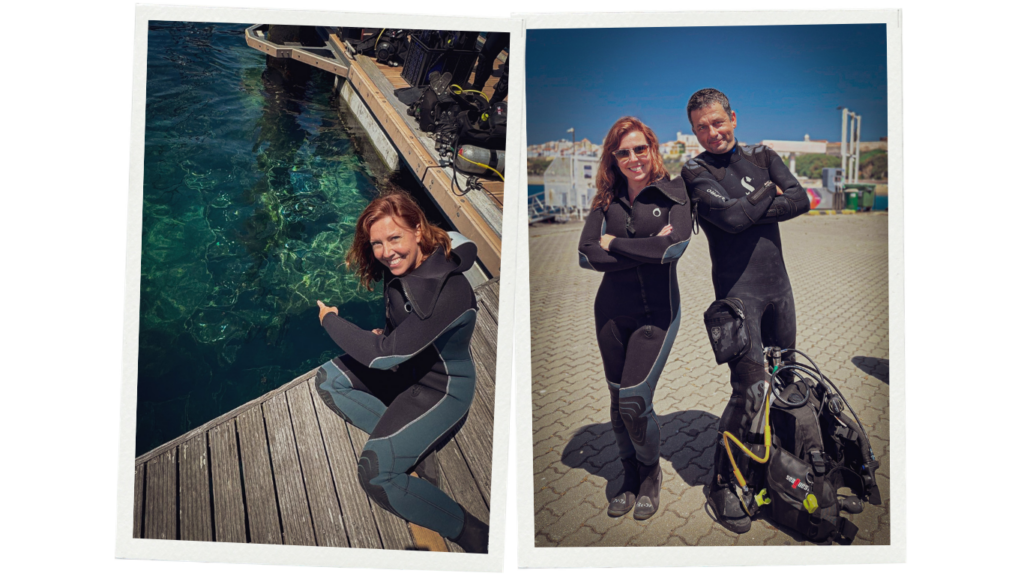
Diving into an underwater wine cellar in Sines
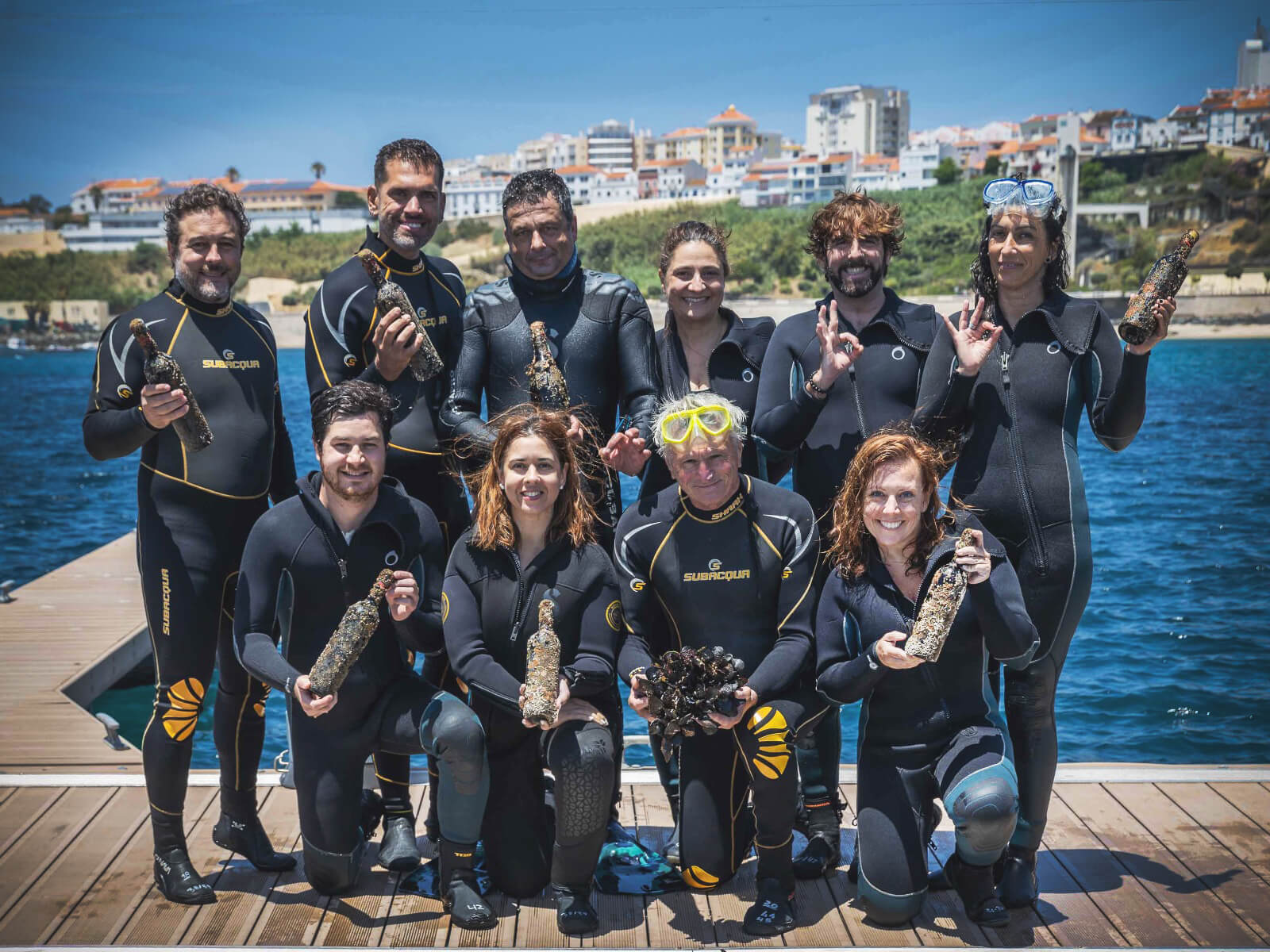
Our dive was led by Joaquim Parrinha and the Adega do Mar / Centro Ecoalga team, who manage the underwater wine cellar off the coast of Sines. The experience is exactly what it sounds like: you put on full scuba gear, enter the Atlantic and descend to the submerged structures where bottles are stored beneath the sea.
What surprised me first was how close everything felt.
We didn’t board a boat and head miles offshore. We simply walked into the water from the harbour area, and some of the shallower crates could already be seen beneath the surface. Further down, at around 8 to 14 metres, were larger structures packed with bottles waiting on the seabed.
And then the wine almost stopped being the main attraction. Because I was underwater.
There is a peace I always feel when I dive that is very difficult to describe unless you have experienced it yourself. The noise above disappears, your breathing becomes the soundtrack, and suddenly you are moving through a completely different world.
Around the wine crates, the Atlantic was very much alive. Fish moved between the structures, marine plants swayed with the current and the bottles themselves had slowly become part of the ecosystem around them. At one point, I even spotted a huge squid.
Not exactly something I had encountered on my previous winery visits.
The crates themselves were far less glamorous than the idea of an “underwater wine cellar” might suggest — and I actually loved that. They were rugged, functional structures sitting on the seabed, already being colonised by marine life.
There was something almost archaeological about swimming towards rows of bottles beneath that green-blue Atlantic light.
Except these weren’t treasures from an ancient shipwreck. They were there intentionally.
And one of them was coming back up with me!
“Fishing” my own bottle of wine
There is a very big difference between being handed an unusual bottle at a tasting and physically bringing that bottle up from the bottom of the Atlantic yourself.
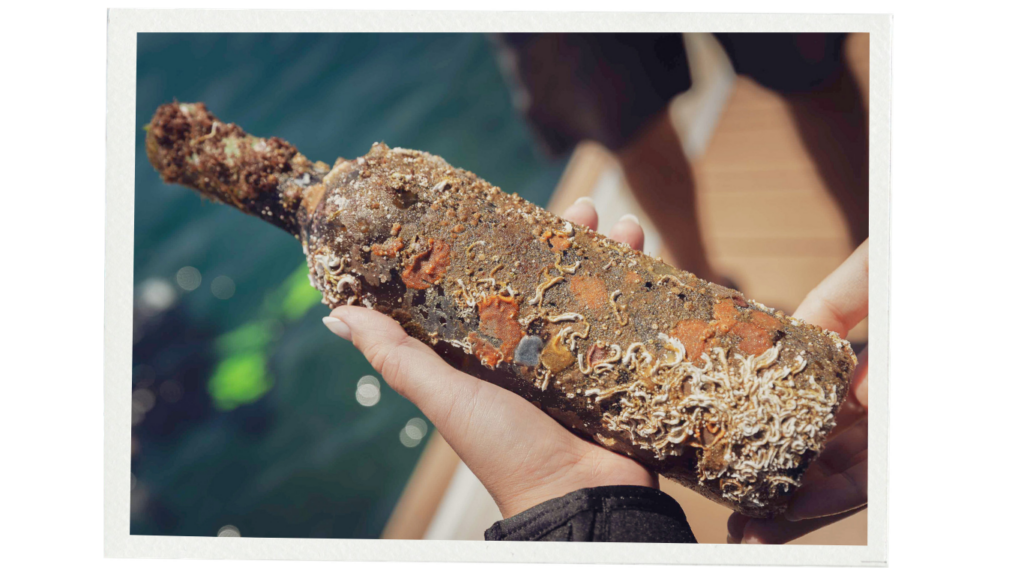
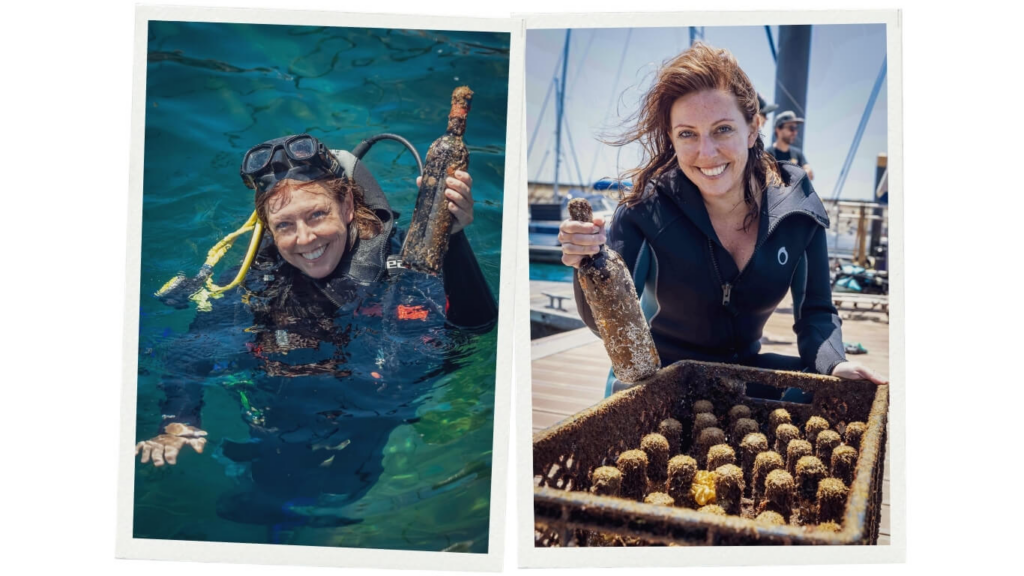
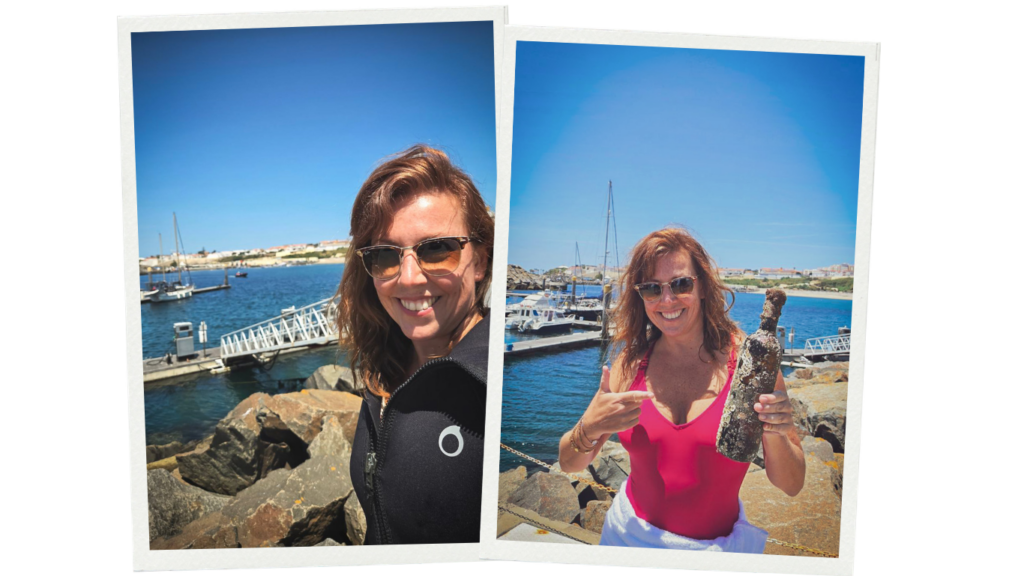
Mine came back looking fantastic… And slightly prehistoric.
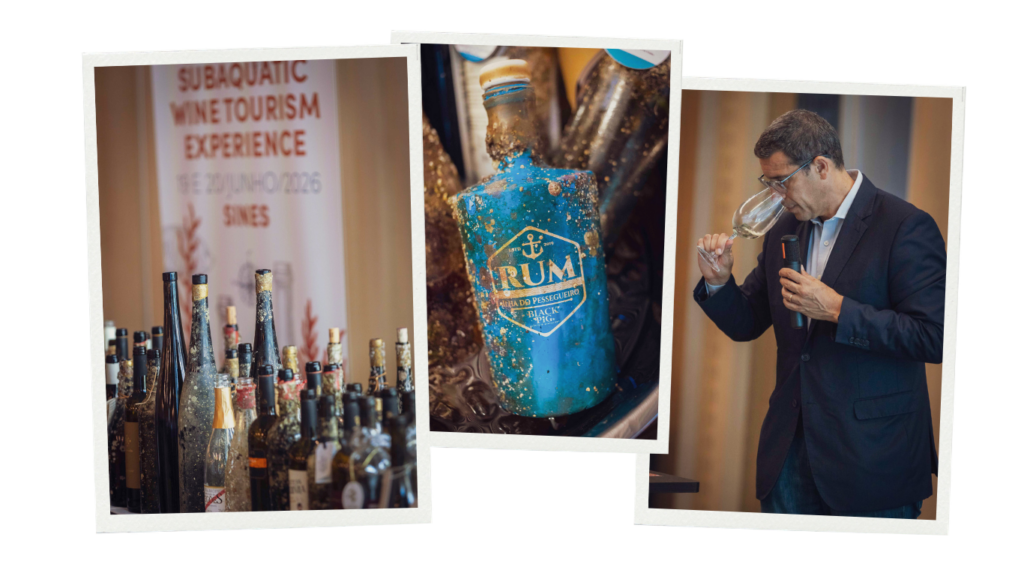
The glass was almost hidden beneath shells, marine growth and tiny organisms that had attached themselves while the bottle sat underwater. It looked less like something that had been stored and more like something that had been discovered.
Almost like pulling a bottle from a shipwreck — except this one had been placed there deliberately and, thankfully, was still very much intended to be drunk.
Holding it once we were back above the surface was one of those little travel moments I know I’ll remember for a long time. I was still in my wetsuit, surrounded by the diving team and everyone else who had just come out of the water, clutching this bizarre, sea-covered bottle that had spent months beneath the Atlantic. Jacques Cousteau would be proud. Ariel would want to keep the bottle.
And I couldn’t help thinking back to Formentera.
Apparently, diving for wine had somehow become a recurring theme in my life. But at least this time, nobody had dropped it by accident.
From the Atlantic to the table
Coming back to the surface with my bottle was only half the experience.
The next question was, obviously: what does all this actually do to the wine?
And there was only one sensible way to find out: Taste a lot of it.
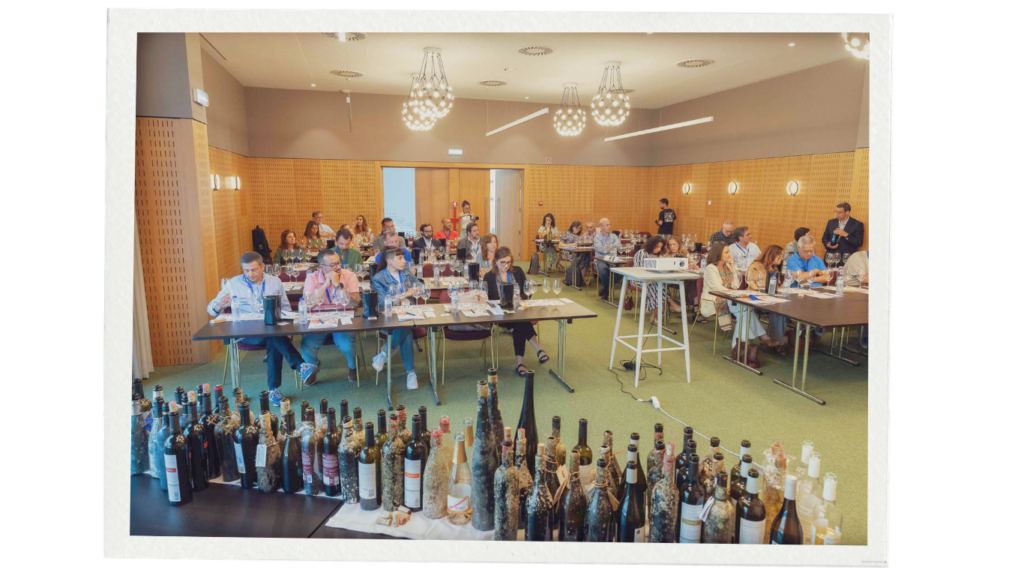
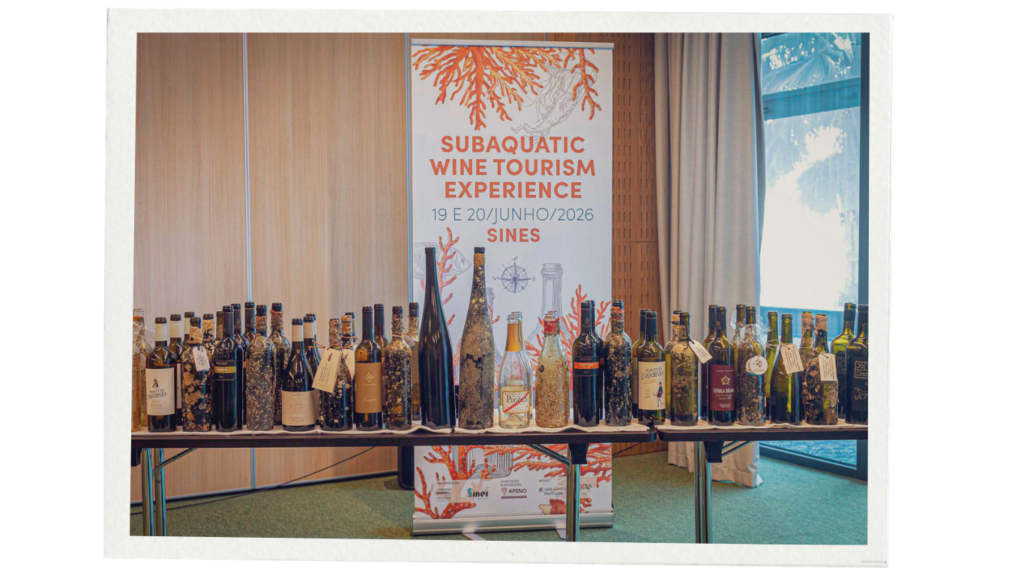
Over the two days in Sines and Porto Côvo, underwater wine followed us from the dive to the table through lunches, dinner and guided comparative tastings. Altogether, I tasted 26 wines from 13 different varieties, alongside underwater-treated beer (yes, you read well) and rum. For every producer, we had one bottle of underwater wine and one bottle of “earth” wine, of the same variety.
It was one of those occasions where saying “I’m working” sounded increasingly questionable as the number of glasses multiplied… And yes, I had to take photos of all the bottles so I would be able to remember all of them.
The main comparative tasting was led by sommelier Rodolfo Tristão, with producers presenting their wines and, importantly, giving us the opportunity to taste examples that had spent time beneath the sea alongside wines aged more conventionally on land.
That side-by-side comparison was what made the whole experience particularly interesting for me.
You weren’t simply being handed an unusual bottle covered in shells and told that the ocean had made it special. You could actually taste, compare and decide for yourself.
And there was no shortage of things to compare.
Whites, reds, sparkling wines, different grape varieties, Portuguese producers alongside international ones — and then, just when I thought we had explored pretty much everything people could reasonably decide to submerge beneath the sea, out came the beer and rum.
Apparently wine wasn’t the only drink that somebody had looked at and thought:
You know what this needs? Several months underwater.
The tastings were also woven into the gastronomy rather than treated as isolated technical sessions. Lunches and dinner brought together the wines with local Portuguese dishes and beautifully fresh seafood, which felt like exactly the right way to experience them.
After all, we were tasting wines shaped by the Atlantic while sitting on the Alentejo coast, eating what had come from those same waters.
For me, that’s when wine tourism becomes much more interesting than simply ticking wineries off a list.
The wine, the food and the place all start telling the same story.
Truth or Mith: Does underwater wine really taste different?
This was the question I was most curious about.
After all, a bottle covered in shells looks fantastic and makes for a great story, but if we’re going to all this trouble to age wine beneath the Atlantic, can you actually taste the difference?
From what I tasted in Sines, my answer is: absolutely, yes.
And because we were comparing wines that had spent time beneath the sea with their land-aged counterparts, the differences were much easier to notice than if I had simply been handed a glass of underwater wine on its own.
Not every wine changed in exactly the same way, and I certainly wouldn’t say that putting a bottle beneath the sea automatically makes it better. But in several of the comparisons, the difference was surprisingly clear.
With some of the underwater wines, the first thing I noticed was the aroma. A few had a slightly unusual smell when first poured — I kept trying to find the right word for it and mossy isn’t quite it — something a little earthier, more intense and different from the same wine aged on land.
On the palate, I often found the flavours more pronounced. What I perceived as minerality was more intense in several of the submerged wines, and there were noticeable differences in freshness, texture and the way the flavours developed in the mouth.
And that is probably the most important thing I took away from the tasting: there isn’t one single “underwater wine flavour.”
The sea doesn’t simply add the same characteristic to every bottle.
During the comparative tasting, sommelier Rodolfo Tristão explained that different styles of wine respond differently to underwater ageing. Whites can show particularly noticeable changes in aroma and flavour, sparkling wines can develop differently in structure and texture, while more structured reds may need longer beneath the sea before the effects become as evident.
The event itself focused on exactly these differences in evolution, texture, freshness and complexity between wines aged underwater and those aged conventionally on land.
For me, that is far more interesting than being told underwater wine is simply “better.”
Sometimes I preferred the sea-aged version. Sometimes the comparison was more subtle. And sometimes what fascinated me most was simply how two bottles that had started from the same place could develop such noticeably different personalities because one of them had spent months sitting beneath the Atlantic.
I’m not a sommelier, and I’m not going to pretend to give you a laboratory analysis of what was happening inside every bottle. What I can tell you is that I could taste the difference.
And after 26 wines, I had plenty of opportunities to check.
Wine tastes even better when Portugal feeds you
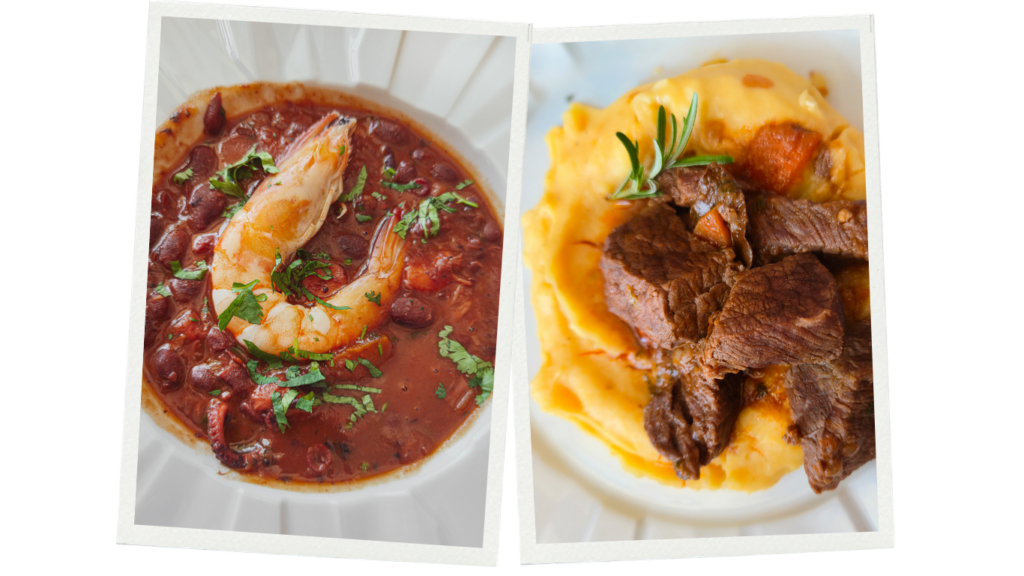
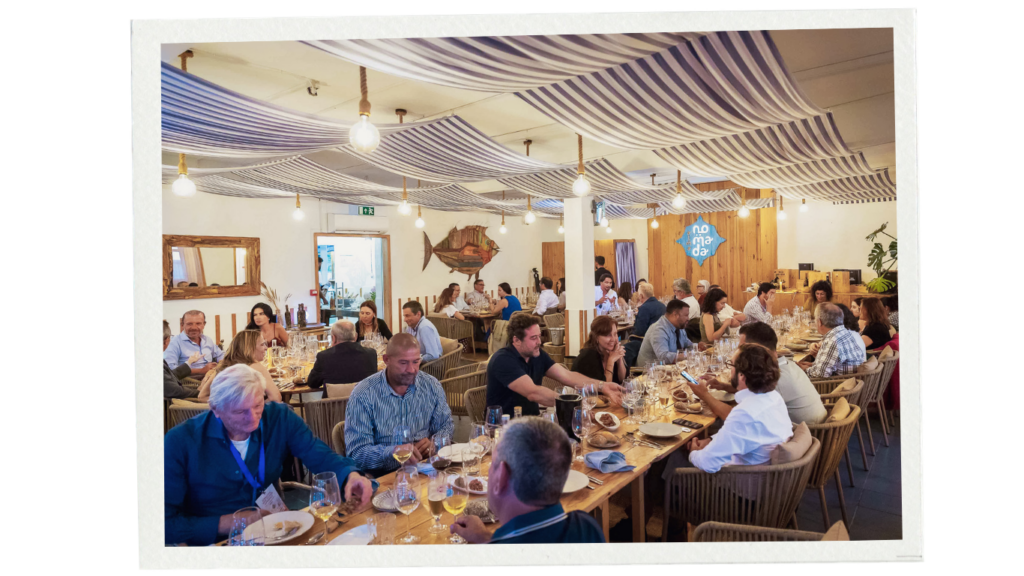
The wines followed us to the table throughout the experience. On the first evening, we headed to Alma Nómada in Porto Côvo for a wine-paired dinner, before finishing the following day with lunch at Casa do Médico de São Rafael in Sines, overlooking the bay.
I would love to give you an elaborate breakdown of every dish we ate, but after two days and 26 wines, you can probably tell where most of my attention was going.
What I do remember is how naturally the food fitted the setting: local flavours, fresh fish and seafood, and the kind of Atlantic-influenced cooking that makes perfect sense along the Alentejo coast. This is a region where grilled fish, octopus, seafood rice and caldeirada — Portugal’s traditional fish stew — are very much at home.
After spending part of the trip literally diving among bottles beneath the sea, continuing to taste those wines over meals by the Atlantic felt like exactly the right way to experience them.
The people behind the experience
As memorable as the dive and the wines were, what really brought the experience together was the people behind it.
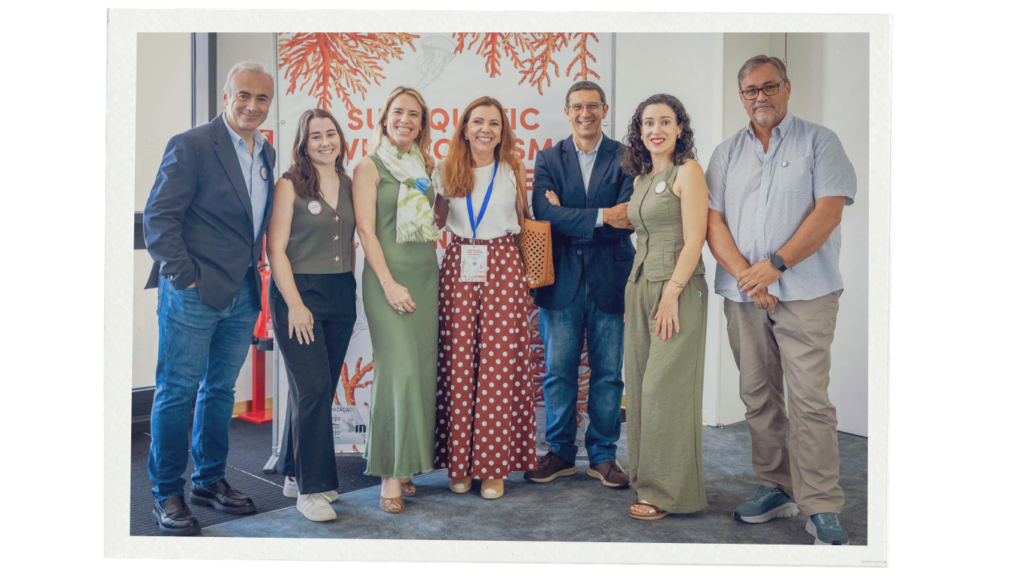
From APENO and its president, wine journalist Maria João de Almeida, to Joaquim Parrinha and the Adega do Mar / Centro Ecoalga diving team, sommelier Rodolfo Tristão, the participating producers, local tourism partners and everyone involved in the organisation, there was a genuine sense of enthusiasm around the project. It never felt like wine was being put underwater simply for the sake of doing something unusual; there was real curiosity about what the sea can do to wine and how that can be transformed into a meaningful tourism experience.
I also loved sharing those two days with journalists and other wine and travel professionals from different places. Part of what makes events like this valuable is exactly that exchange: tasting together, comparing impressions, asking questions and discovering how differently each person experiences the same glass of wine — or, in this case, the same bottle after it has spent months beneath the Atlantic.
For me, that combination of wine, people, place and experience is what good wine tourism is really about.
How I would build this into a Portugal wine trip
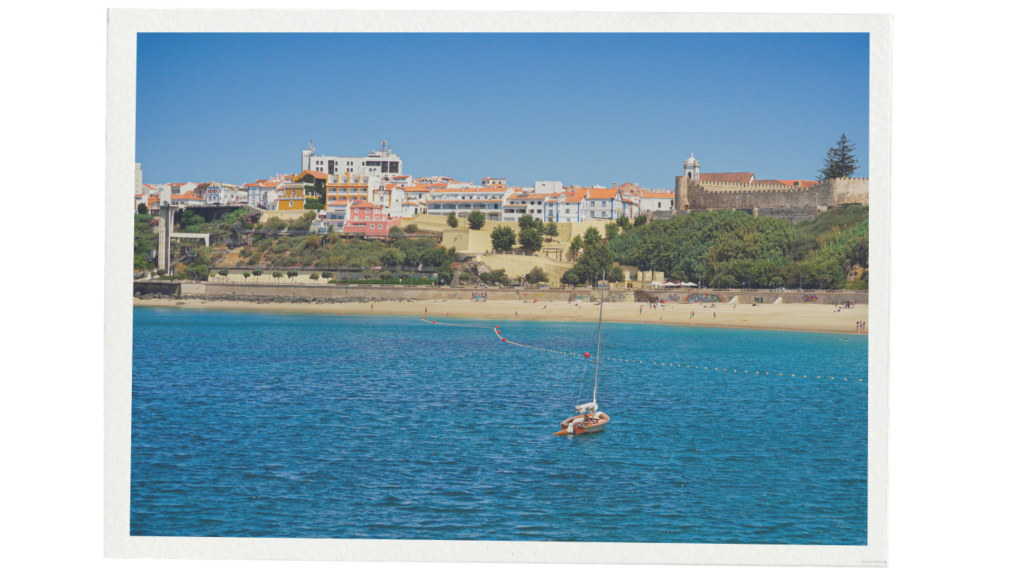
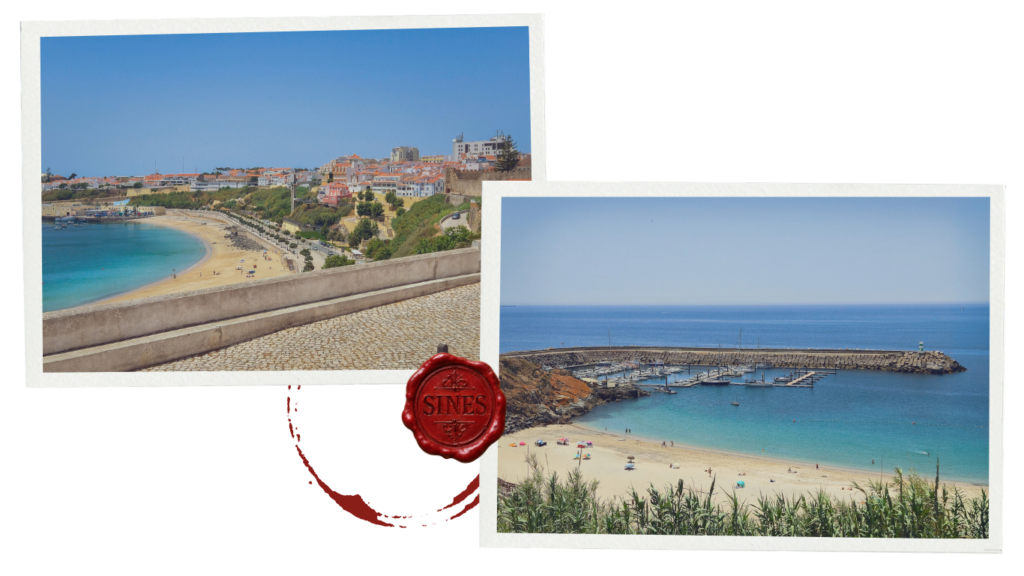
I didn’t have nearly enough time on this visit to properly explore Sines or Porto Côvo — my schedule was rather occupied with diving and tasting wine, which I consider a perfectly valid excuse — but even in a short stay, it was easy to understand why this part of the Alentejo Coast works so well for underwater wine tourism.
The sea is part of the identity here. Sines has a long maritime and fishing tradition, while nearby Porto Côvo brings a softer, more atmospheric side of the coast, with whitewashed houses, beaches, cliffs and the Atlantic always present. That connection between wine, seafood, landscape and sea is what makes the experience feel rooted in the destination rather than simply unusual for the sake of being unusual.
And this is where my travel-designer brain kicks in: I would never send someone to Sines simply to dive for a bottle and leave again.
I would build it into a wider journey through the coast, with time for Porto Côvo, fresh seafood, beaches and perhaps Comporta or Melides, before continuing inland towards Alentejo wine country, where the landscape and wine experience shift completely.
That contrast is exactly what I like in a good wine itinerary. Rather than cramming several similar winery visits into two days, I would mix different ways of experiencing wine: perhaps a traditional estate, an architecturally interesting winery, long Portuguese lunches, a countryside stay… and then one cellar that happens to be several metres beneath the Atlantic.
I think this experience is especially well suited to wine lovers who have already done the classic winery tour, adventurous couples or small groups, divers who also love wine, repeat visitors to Portugal, and travelers looking for something experiential rather than predictable.
You do not need to be a wine expert to enjoy it.
You just need to be curious, open to trying something different and — if you plan to dive — reasonably comfortable with the idea that part of your wine experience may take place below sea level.
For me, that is exactly what good wine tourism should do: connect the wine to the place, the people, the food and the journey around it. And that is exactly how I design our Portugal itineraries at Experience Wanderlust — tailor-made around the way you like to travel. Explore our Portugal page for inspiration, and get in touch when you’re ready to create your own journey.
Why this experience stayed with me
I have visited multiple wineries across Europe, attended numerous wine events, had wine tastings in historic cellars, contemporary architectural landmarks and beautiful vineyard settings, and I had already encountered underwater winemaking before arriving in Sines.
But this felt different.
Maybe because it brought together two things I already love so much — wine and the sea — in a way that was adventurous, slightly eccentric and completely memorable.
There is something wonderfully simple about the memory now: getting into the water, descending into that quiet green-blue world, swimming past marine life and wine crates, choosing a bottle and bringing it back to the surface with me.
Then, hours later, sitting around a table tasting wines that had been through that same underwater environment and discussing how differently they had evolved.
That is exactly what I love about wine tourism when it is done well.
It is not only about what is in the glass.
It is about where you are, who you meet, what you learn and what happens around that glass.
And I may eventually forget some of the individual tasting notes from those 26 wines.
I am fairly certain I will never forget the day I had to dive into the Atlantic to get one.
Ready to plan a different kind of wine trip to Portugal?
At Experience Wanderlust, I design tailor-made journeys that go far beyond the traditional winery visit — combining wine with gastronomy, landscapes, architecture, distinctive hotels and memorable experiences like this one.
Whether you already know exactly which Portuguese wine regions you want to explore or simply know that you want something a little less ordinary, tell me how you like to travel and what you love, and I’ll design the journey around you.
Explore our Portugal itineraries for inspiration, or get in touch to start creating your own tailor-made wine journey.
Frequently asked questions about underwater wine tourism
What is underwater wine tourism?
Underwater wine tourism combines wine travel with wines that spend part of their production or ageing process beneath the sea. Experiences can range from tasting and comparing sea-aged wines with conventionally aged versions to meeting the producers behind them — and, in destinations such as Sines, even diving to submerged wine structures.
Does underwater wine really taste different?
It can. During the comparative tastings in Sines, I personally noticed clear differences between several underwater-aged wines and their land-aged counterparts, particularly in aroma, intensity, texture and what I perceived as minerality.
However, there is no single “underwater wine taste”. Different wines react differently depending on factors such as the wine style, depth, temperature, time underwater and marine conditions.
Where can you experience underwater wine tourism in Portugal?
Sines, on Portugal’s Alentejo coast, has become one of the country’s most interesting destinations for underwater wine tourism. The Adega do Mar / Centro Ecoalga project works with wines submerged off the coast, while APENO’s Subaquatic Wine Tourism Experience has brought together diving, comparative tastings, gastronomy, producers and wine-tourism professionals around the concept.
Can tourists dive for underwater wine in Sines?
Yes, diving activities connected to the underwater wine project have been made available to the public. During the 2026 Subaquatic Wine Tourism Experience, the programme included public diving sessions with the Adega do Mar / Centro Ecoalga team.
Specific activities, including whether bottle retrieval is available, should always be confirmed in advance because they depend on the operator, season, weather and sea conditions.
Do I need previous scuba-diving experience?
Not necessarily. Some introductory diving activities can be suitable for beginners and include professional instruction, equipment and safety preparation.
Participation is always subject to the diving operator’s requirements and assessment, so this is something to arrange in advance rather than assume will be possible on the day.
How can underwater wine tourism fit into a Portugal itinerary?
I would combine Sines with a wider journey through the Alentejo coast and wine country rather than treating it as an isolated excursion.
A tailor-made itinerary could combine underwater wine tourism with Porto Côvo, coastal gastronomy, beaches, Comporta or Melides, traditional and contemporary wineries, countryside stays and deeper exploration of the Alentejo wine region.
That combination of wine, landscape, food and unusual experiences is exactly how I like to design wine travel through Portugal.